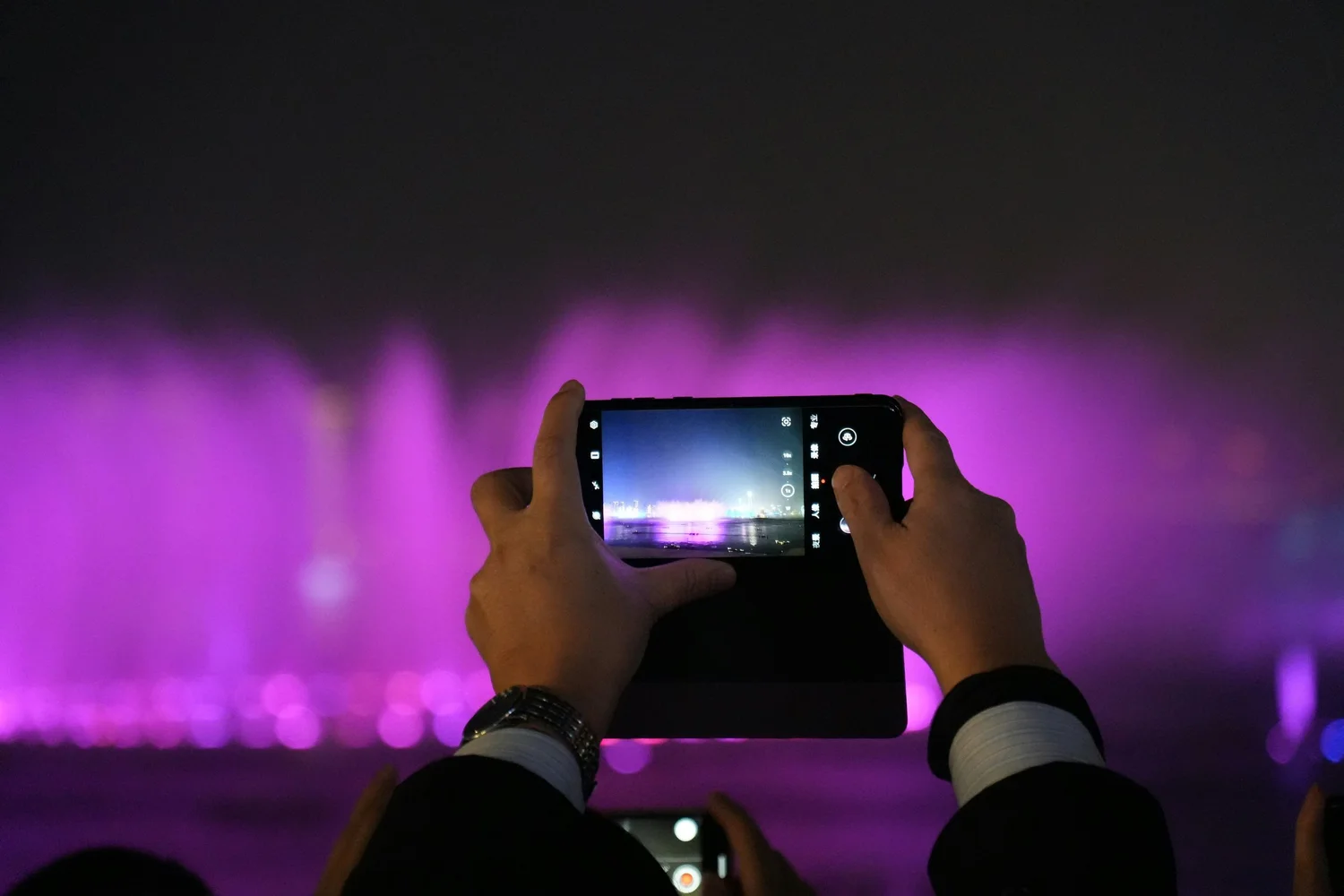

Image: Hands holding smartphone recording a purple fountain show. photo – Free Technology Image on Unsplash
The way people engage with films and storytelling has expanded far beyond the cinema screen. Streaming platforms, mobile devices, and on-demand access have reshaped not only when audiences watch, but how they experience stories. Viewing is no longer confined to a fixed time or place; it moves fluidly across environments, often blending into everyday routines.
Changing Viewing Habits in the Digital Age
Traditional film viewing once implied a level of commitment: a trip to the cinema, a scheduled broadcast, or a deliberate choice to sit through a full narrative. That structure created a focused environment where storytelling unfolded without interruption. In contrast, modern consumption is fragmented. Viewers pause, rewind, switch devices, or divide attention between multiple screens.
Streaming services have normalized this flexibility. A film may be watched in segments across different settings, while series are often consumed in rapid succession. At the same time, mobile viewing has introduced a more casual relationship with content. Stories compete with notifications, conversations, and other media, making engagement more fluid but also less concentrated.
The Impact of Constant Content on Focus
The abundance of digital content has shifted expectations around pacing and attention. Short-form videos, designed for quick consumption, have become a dominant force in shaping viewing habits. These formats prioritize immediacy, often delivering impact within seconds.
As research suggests, frequent exposure to rapid, high-volume content can influence how individuals process information and sustain attention. This does not necessarily diminish the value of long-form storytelling, but it does create a tension between depth and accessibility.
For many viewers, maintaining focus on a two-hour film now requires a more conscious effort. Interruptions are easier, distractions are constant, and the expectation of continuous stimulation can make slower narratives feel demanding. The challenge for filmmakers is not only to tell compelling stories, but to hold attention in an environment that rarely stands still.
How Digital Consumption Shapes Story Engagement
As viewing habits evolve, so do audience expectations. Faster pacing, immediate hooks, and clear narrative direction have become increasingly important. Stories are often designed to capture attention quickly, anticipating the possibility that a viewer might move on within moments.
This has influenced both structure and style. Openings are more direct, exposition is streamlined, and visual storytelling often carries a greater burden. While this can lead to sharper, more efficient narratives, it also raises questions about depth and subtlety.
At the same time, audiences remain capable of deep engagement when the conditions allow for it. The success of certain long-form series and films suggests that attention has not disappeared, but rather shifted. It now depends more heavily on context, intention, and the surrounding environment in which content is consumed.
Structured vs Passive Entertainment
One of the defining characteristics of modern media consumption is the contrast between passive and structured engagement. Endless scrolling encourages a continuous flow of content with little resistance. Viewers move from one piece to another without a clear endpoint, often guided by algorithms rather than deliberate choice.
In contrast, structured experiences introduce boundaries and intention. These environments encourage users to engage with content in a more focused way, offering defined paths rather than infinite streams. Even outside traditional film platforms, examples of structured digital systems can be observed. For instance, platforms such as Jackpot Slots Canada present content within a clearly organized framework, illustrating how digital environments can guide interaction rather than disperse it.
This distinction matters because it influences how stories are received. Passive consumption can dilute engagement, while structured formats tend to support more sustained attention and clearer narrative absorption.
Finding Balance in Modern Media Consumption
As digital entertainment continues to expand, the question is not whether habits will change, but how individuals choose to navigate them. Mindful viewing has become increasingly relevant. Selecting what to watch, setting aside time, and reducing distractions can restore a sense of focus that is often lost in continuous consumption.
Choosing quality over quantity does not require abandoning digital convenience. Instead, it involves a shift in approach. Rather than reacting to an endless stream, viewers can shape their own experience, creating space for deeper engagement with stories that deserve attention.
The landscape of modern entertainment is defined by choice. With that choice comes the ability to balance immediacy with intention, allowing storytelling to retain its impact even within a constantly evolving digital environment.
The habits formed in this space will continue to influence how stories are told and experienced. As audiences adapt, so too will the structures that deliver content, making the relationship between viewer and narrative more dynamic than ever.