
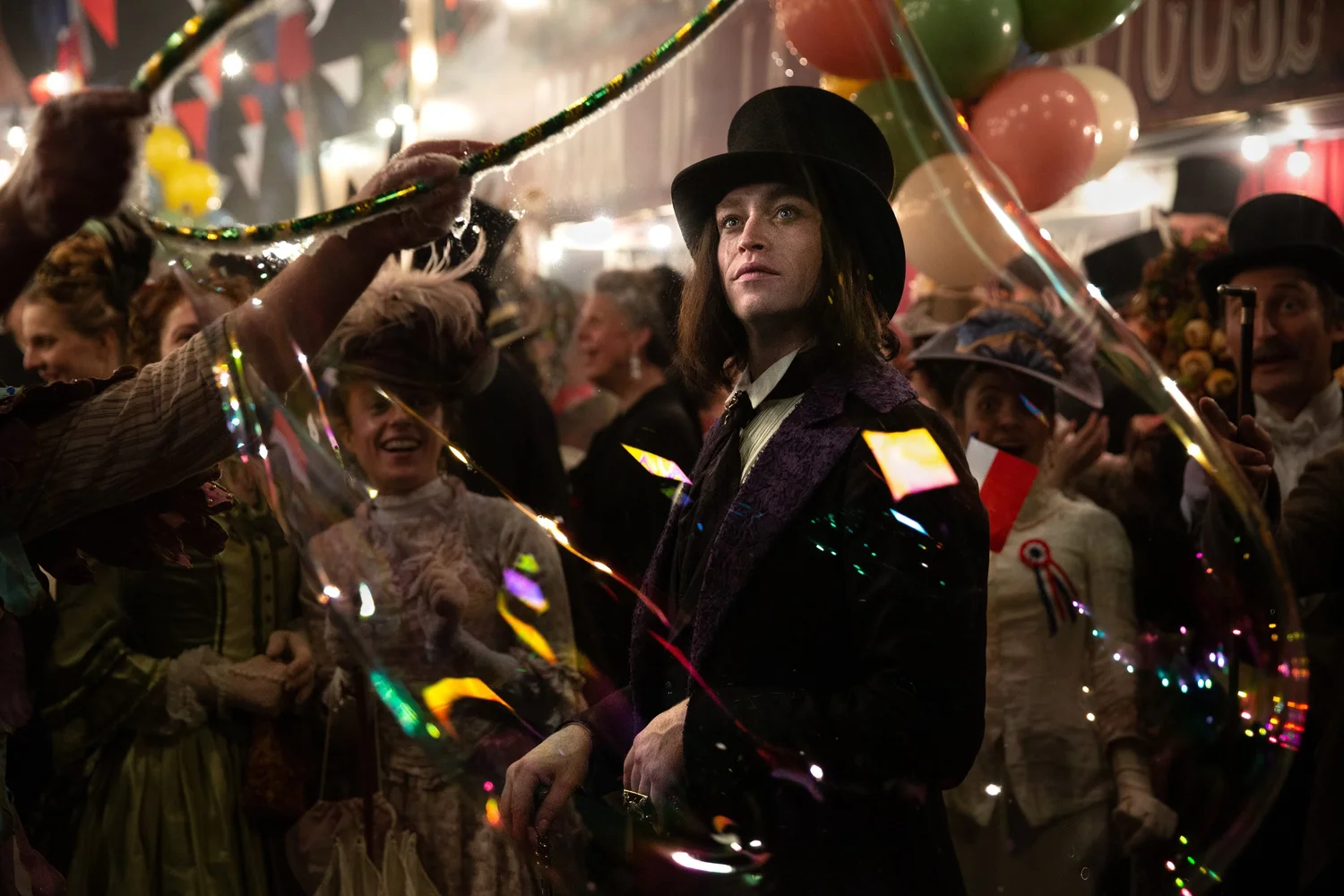

Image courtesy of Vertical Entertainment
DRACULA– 2 STARS
The arrival of Luc Besson’s take on Dracula brings to mind the dichotomy between overtones and undertones. The venerable character created by Irish writer Bram Stoker in 1897 is listed in the Guinness Book of World Records as the most portrayed literary character in history. Count Dracula has been molded and modified every which way through more than 90 different film incarnations alone since the advent of the art form at the turn of the 20th century. In each interpretation—be they ones as serious as a heart attack, like Robert Eggers’ Nosferatu, or safer images for the wider masses like Adam Sandler’s animated spook in the Hotel Transylvania franchise—creative license has turned the dials to calibrate what traits from the source material are amplified and which ones are softened.
As the writer and director of Dracula, Luc Besson is no different. The Frenchman, known for slick commercial action, is making choices with the legendary icon that he deems flashy for both an engaging picture and as a spotlight for his new actoral muse—Caleb Landry Jones, Besson’s lead from 2023’s DogMan that he crafted this film specifically.
LESSON #1: CHOOSING YOUR OVERTONES— Right out of the gate, Besson’s Dracula leans heavily on the tonal choice of portraying a tragic, romantic figure. The film opens to the twinkling sound of a 15th-century mechanical music box (in what will be the thematic basis for composer Danny Elfman’s appropriately gothic musical score) and the playful throes of passion that come from two lovers having a pillow fight in between coital activities, as Prince Vladimir of Wallachia (Jones) is completely smitten by his new bride Elisabeta (model, socialite, and actress Zoë Bleu, born from the Arquette acting tree). Normally, what transpires next in the traditional origin of Count Dracula is haunting and heretical. Here, it’s a halfway weepy springboard to a lovelorn destiny.
When Elisabeta dies in Vladimir’s arms after battling the Ottomans, he murders a cardinal (Haymon Maria Buttinger of The Captain), denounces God, and takes on his bloodthirsty curse of immortality. Rather than become an outright monster as the author intended, Caleb Landry Jones’s motivated path in Dracula becomes a centuries-long search for the possible reincarnation of his lost wife. This has the nobleman scouting the social circles of European high society with a pheromone-surging perfume of his own concoction that lures his new bridal candidates for craved affection. Yes, this is a Dracula that wields bouquets before bites. Consider the overtones chosen.
After 400 years, the Count thinks he has found The One in Mina Murray (also Bleu, naturally), the fiancée of his real estate lawyer Jonathan Harker (Andor’s Ewens Abid) and best friend to a hot little dish, Maria (the Lucy Westenra replacement played Matilda De Angelis of Rose Island), he has already turned into a vampire. Arriving in Paris by boat and coffin, Dracula begins his soft-spoken and gift-lavishing courtship of Mina while being tracked by an unnamed priest (Academy Award winner Christoph Waltz, Besson’s big casting get) who fashions himself to be an expert on the underground lore of vampires.
For many, this plot of Dracula—trading split crimson for blood that flushes cheeks and fills loins—might read like a lusty beach-read version narrated by the smooth voice of Shane East, and those hot-and-bothered folks looking for love may very well favor this type of depiction. Zoë Bleu is a fetching statue of beauty and weakening resolve. Likewise, Maria De Angelis is having a seductive blast as the come-hither temptress, audibly chomping those canines down often to announce her violent vigor. The unfortunate imbalance in that equation is Caleb Landry Jones as the engine of romance. Try as he may with slow line deliveries through an exotic accent, he doesn’t have or convey the same swoon-worthy draw as the ladies.
LESSON #2: CHOOSING YOUR UNDERTONES— Because this amorous route was chosen, Dracula is barely a villain, and other core traits are greatly readjusted and reduced to be merely undertones. The first is the dangerous and unquenchable bloodlust that should tint the corners of this fable. Sure, a few necks get bitten, some hearts get stabbed, and a couple of heads are removed from their bodies. Still, the operatic violence is shockingly light and even cartoonish when Dracula’s top muscle is animated stone gargoyles from his vast castle, performing WWE-style wrestling moves to dispatch invading authorities.
The second biggest reduction is the sense of lore, and it’s not from a lack of talking. If anything, it’s too much. Luc Besson’s script takes long stretches where his cast is given almost coffee shop-level conversations to explain how they got in the pickles they find themselves currently in. For example, the classic dinner invitation encounter between Jonathan Harker and the aged Dracula (achieved with admirably excellent hair, makeup, and prosthetics given to Jones) should freeze even the most hearty spines and curdle with sickening suspense. Instead, it hits like Harker is the clueless Little Red Riding Hood blathering “my, what…” dialogue towards Dracula’s weathered opulence patiently waiting for the kill like he’s the Big Bad Wolf disguised as Grandma. The sum is flatly not scary, and that’s a mistake with this material.
Everyone’s an exposition dumper, with Christoph Waltz’s thin Van Helsing composite being the worst offender. Sure, the two-time Oscar winner can enunciate verbal poetry out of any scripted lines in the world, but you wish he would let any mystery come to us—even if it’s a familiar one—and spur characters to act on their desires instead of verbally longing for them. Thanks to umpteen versions and retellings, this whole thing has become a bit of a bedtime story, no matter how it’s sliced. Moving to the beat of that aforementioned tiny music box and not something deeper, Besson’s Dracula, and its selection of emphasized overtones and reduced undertones, are misaligned to become a lullaby from what could have been grander results.
LOGO DESIGNED BY MEENTS ILLUSTRATED (#1370)