

Photo by Alex Tyson on Unsplash
On a professional film set, a document called the Costume Bible tracks every garment on every actor on every shooting day, with photographs taken before and after each scene so continuity holds across months of shooting. It exists because clothes, left alone, drift. Sleeves roll up. Buttons come undone.
Your closet is a smaller, slower version of the same problem. The clothes you own have a continuity of their own, and most home wardrobes lose it without anyone noticing. The rest of this piece looks at how a film costume department handles garments across a production, and what each stage tells you about how your own clothes should be sorted, housed, and kept.
Stage One: Organize Clothes by How Often You Wear Them
Before a single costume is pulled, the designer reads the script and does a breakdown. Every character gets a sheet. Every scene gets a look. Clothes are sorted by who wears them, when, and how often, before the hangers ever come out.
Home closets almost never get this treatment. People buy, inherit, and shove. The first discipline worth borrowing from film is spending an afternoon pulling everything out and sorting by use rather than by category. Daily rotation in one zone, weekly in another, seasonal and occasion-wear further back.
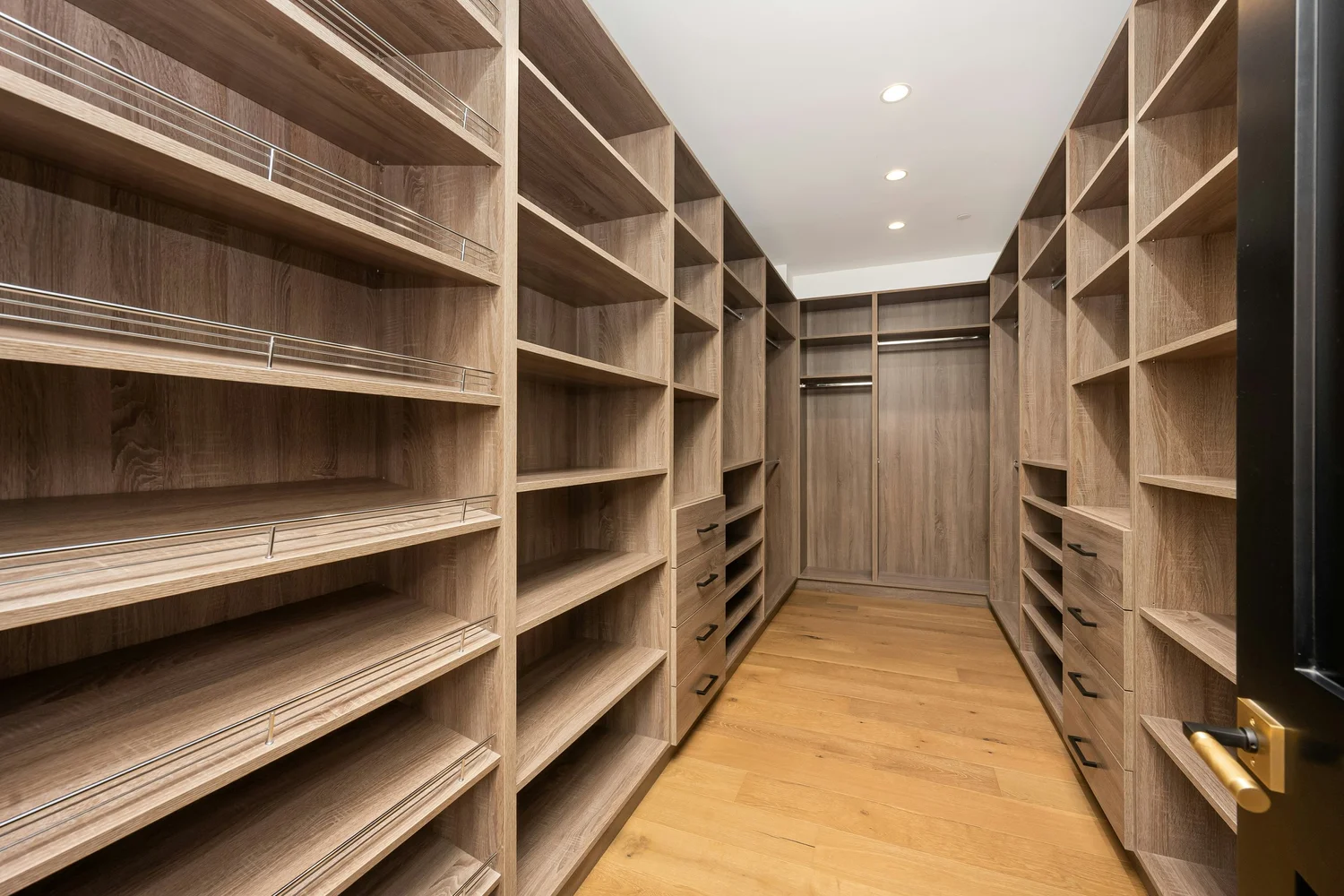
If you are rebuilding the storage itself, this is the moment to measure what each zone actually needs, which is why a well-planned built-in wardrobe beats a generic rack: hanging height, drawer depth, and shelf spacing can be matched to what you actually own.
Stage Two: Decide What Deserves Space in Your Closet
On a production, fittings decide whether a garment makes it into the film or gets cut. If it doesn’t fit the actor, the scene, or the arc, it doesn’t travel to set. Nothing gets stored just in case.
The home equivalent is an honest try-on. Anything that doesn’t fit the body you have now, the life you actually live, or the climate you’re in should not be using prime real estate: eye-level hanging, the top drawer, the front of the shelf. Edit before you organize, or you’ll end up organizing clothes you’ll never wear.
Stage Three: Store Clothes to Prevent Long-Term Damage
Once a shoot wraps, hero garments often head into archive. This is where film wardrobes borrow directly from museum conservators, and where home closets get the most wrong. The National Park Service guidance on textile care is a useful cheat sheet: keep temperature and humidity stable, keep light off the fibers, and avoid stacking folded items so heavy that creases set permanently.
Clean before storing. Body oils, perfume, and food residues attract moths and set into stains.
Skip the dry-cleaner plastic. Those bags trap moisture and off-gas over time. Breathable cotton garment bags are the long-term choice.
Use acid-free tissue for folds. Padding the folds of knitwear and formalwear with acid-free tissue helps reduce the hard crease that can eventually become a tear.
Hang the right things, fold the rest. Knits stretch on hangers; tailored jackets collapse in drawers. Match the garment to the method.
Stage Four: Keep Track of What You Own
Film costume departments rely on detailed records and photographs to keep track of garments throughout production. At home, a simpler version of that system can make managing your wardrobe much easier.
Take photos of special-occasion outfits, label seasonal storage bins, and keep a basic inventory of clothing packed away between seasons. Knowing what you own and where to find it prevents unnecessary purchases, makes seasonal wardrobe changes easier, and helps ensure forgotten pieces don’t sit untouched for years.
Film costume departments don’t leave garment care and organization to chance, and your closet can benefit from the same approach. By sorting clothes according to how you use them, making thoughtful decisions about what to keep, and storing each piece properly, you can create a wardrobe that’s easier to manage and helps your clothes last longer.