
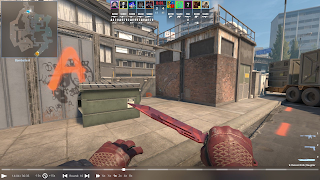

A CS2 match is not just a sequence of rounds. It has tension, pressure, mistakes, momentum shifts, individual hero moments, and team decisions that can completely change the result. That is why a raw match demo can become something more than a replay. With the right selection, editing, camera work, and pacing, it can turn into a CS2 highlight movie that feels almost like a short sports film.
This is one of the most interesting parts of Counter-Strike 2 as an esport. The game is tactical and mechanical, but it is also cinematic. A clutch is not only a kill count. A retake is not only a tactical decision. A comeback is not only a scoreline. When viewed through a demo, these moments can be studied, cut, slowed down, and rebuilt into a story. This is also why many players choose to buy CS2 skins: a memorable play often looks even stronger when the weapon, knife, or gloves match the player’s style and make the highlight more visually recognizable.
What a CS2 match demo really is
A CS2 match demo is a recorded version of a completed match. It allows players, analysts, editors, and fans to watch the game again from different perspectives. Instead of relying only on memory or a live broadcast, a demo lets you return to key rounds, check player positioning, review utility usage, and understand why a moment worked or failed.
Demos are useful for different groups. Players use them for improvement. Coaches use them for tactical review. Editors use them to create highlight videos. Content creators use them to capture cinematic angles, replay clutches, and build short-form clips. In other words, the same file can be a training tool, an analysis source, and raw material for entertainment.
In CS2, the demo experience has continued to evolve. Players can use the console command playdemo to launch a demo file and open the demo interface with demoui or Shift + F2. The demo UI makes it easier to pause, skip, control speed, and move through the match. These tools are central to both CS2 demo review and highlight production.
How CS2 replay system helps storytelling
The CS2 replay system gives creators control over time and perspective. A live match moves too fast. Important details can be missed: a smoke that creates the opening, a flash that wins the duel, a silent flank, a fake rotation, or a player holding patience for ten seconds before the decisive kill.
Through the replay system, those details can be shown properly. The editor can start before the kill, show the setup, build tension, and then reveal the final action. This matters because a highlight movie is not only about impact shots. It is about rhythm.
A good CS2 highlight movie usually follows a structure:
Setup: show the score, position, or danger.
Build-up: show movement, utility, or enemy pressure.
Moment: the kill, clutch, retake, or flick.
Reaction: scoreboard change, round win, crowd noise, or next cut.
Context: why this moment mattered in the match.
This is what separates a simple frag compilation from a real highlight movie. One shows clips. The other builds a feeling.
The role of the CS2 demo viewer
The CS2 demo viewer is where the raw material becomes usable. It allows the creator to move through the match, jump between rounds, slow down key actions, pause before important moments, and choose which perspective tells the scene best. This is especially useful for clutches, where the first-person view may show pressure and aim, while a wider perspective can explain positioning and timing.
The demo viewer is also important because CS2 can be very fast. A kill that takes half a second may need several replays to understand. Was it crosshair placement? Was it timing? Did a teammate flash? Did the opponent make noise? Did the player pre-aim because of previous information? A demo lets the editor answer those questions visually.
Valve has also improved demo playback accuracy over time. In late 2025, CS2 received TrueView, a feature designed to make demo playback match the player’s original experience more closely by accounting better for the player-side view rather than only the server-side version. That matters because small differences in what a player saw can affect how a shot, peek, or duel appears in replay.
First-person view vs cinematic camera
One important creative decision is whether to use first-person view or cinematic angles. First-person view is best for aim, pressure, and player experience. It lets the viewer feel the crosshair placement, recoil control, and reaction speed. For a pure frag movie, first-person clips are often the most direct option.
Cinematic angles are better for storytelling. They can show how a player moves through the map, how enemies are positioned, or how a retake develops. A wider angle can make a clutch easier to understand, especially when several players are moving at once.
The best highlight movies often combine both. They start with a wide or third-person perspective to show context, then cut to first-person view for the decisive duel. This gives the viewer both information and emotion.
How players use demos to improve
Not every demo becomes a movie. Many demos are used for serious improvement. A player reviewing a CS2 match demo can check crosshair placement, death positions, utility timing, rotations, communication mistakes, and decision-making. This type of review is less glamorous than highlights, but it is often more valuable.
A practical review can focus on a few questions:
Why did I die in this round?
Was my position useful or isolated?
Did I use utility before taking a duel?
Was I tradable by a teammate?
Did I rotate too early or too late?
Did I understand the opponent’s pattern?
Did my play help the team win the round?
This is where the demo becomes a lesson. A highlight movie shows what went right. A demo review shows why it happened or why it failed.
Conclusion
A CS2 demo is more than a recording. It is a source of analysis, memory, and storytelling. Through CS2 demo review, players understand their mistakes and improve. Through the CS2 demo viewer and replay tools, editors find the moments that matter. Through the CS2 replay system, a raw match becomes something that can be studied, cut, and shaped into a highlight movie. It also shows why some players later decide to sell CS2 skins they no longer use: if a weapon or knife no longer fits their visual style in clips, demos, or highlights, selling it can help them rebuild a cleaner and more personal loadout.
That is why Counter-Strike remains so powerful as an esport. Every match contains more than kills and scorelines. It contains pressure, timing, teamwork, risk, failure, and payoff. When a creator turns a CS2 match demo into a highlight movie, they are not just showing frags – they are turning competitive play into a story.
Skin.Land also fits into this culture because highlights are not only about gameplay, but also about how a player looks in the moment. A clean AK-47 skin, a rare knife, gloves, or a full matching loadout can make a clutch or ace more memorable on video. On Skin.Land, players can buy CS2 skins, compare prices, check different wear levels, and use filters by weapon, float, price, and other details. This makes it easier to build a loadout that looks good not only during regular matches, but also in demos, clips, and highlight movies.