
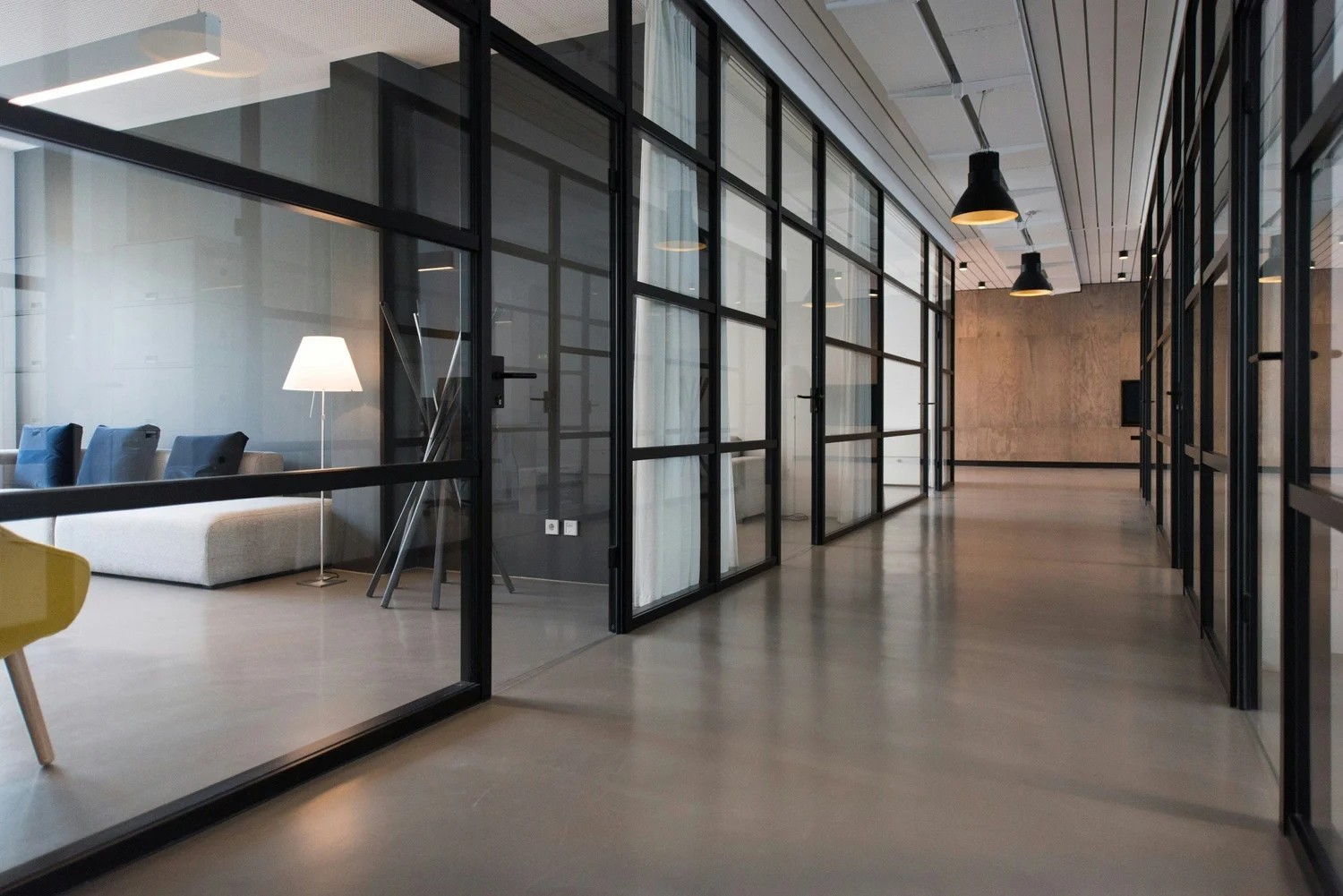

Image: Hallway between glass-panel doors photo – Free Office Image on Unsplash
Outdated glass can make a commercial space feel harder to lease, access, and maintain long before a full remodel is on the table. Cloudy entry glass, scratched frames, mismatched hardware, bulky partitions, cracked panes, and fogged panels can make the property look older than it is during lease tours, tenant visits, or daily operations. Commercial glass installation can target those visible problems without forcing every finish to change at once.
Budget and scheduling limits make prioritization important. The best upgrades improve first impressions, access, safety, visibility, and daily use at the same time. Entrances, interior layouts, access points, custom glass touches, and high-visibility damage are the right places to start. Reviewing those areas first helps teams decide what to replace now, what can wait, and how to reduce downtime while work is completed.
Refresh the Front Entrance
Smudged or fogged storefront glass and worn kick plates stand out before anyone reaches the handle. When the entry has misaligned framing, scuffed push bars, or patched weatherstripping, it reads like a space that has been pieced together over time. Replacing the door system and updating the surrounding frame tightens the look and improves the way the entrance sits in the opening. A polished commercial glass installation removes haze and scratches that make the storefront look tired from the lot or sidewalk.
Entry upgrades work best when the details are matched across the full opening, including glazing thickness, finish, and hardware style. Door closers and hinges need to be sized for the traffic level so the door shuts smoothly without slamming or dragging. Open sightlines through the glass can matter in shared corridors where tenants compete for attention, and code requirements may affect panic hardware or swing clearance. Measure the opening, confirm the existing framing condition, and schedule installation around business hours and deliveries.
Rework Interior Layouts
Deep interior zones can feel cramped when solid dividers cut off daylight and create narrow circulation paths. Older partition runs often land in the wrong places, turning reception, waiting areas, and conference rooms into darker pockets that make the suite feel smaller than it is. Swapping dated walls for glass partitions opens up visibility across the space while keeping rooms defined for meetings and privacy. In many office plans, this change makes the overall layout easier to read without moving major walls or services.
Glass partition work still needs practical planning around sound control, safety, and how the space is used daily. Panel height, door swing, and hardware choices affect conference room noise control and equipment movement through openings. Existing flooring, ceiling grids, and sprinkler layouts can limit where frames land, so field measurements matter before anything is ordered. Check local code needs for tempered glass, markings, and egress clearance, then coordinate installation around tenant schedules.
Upgrade Doors and Access Points
Sticking door slabs, dragging sweeps, and closers that snap shut are easy to hear and feel in a busy corridor. Loose hinges can pull doors out of alignment, and worn latch sets or tired panic bars can take extra force to operate. When staff have to shoulder a door open or visitors hesitate at a handle, the space reads as dated even if the finishes are new. Replacing the door, frame, and hardware as a set brings back smooth swing, cleaner gaps, and consistent operation.
Access point upgrades need to match how the opening is used, not just what looks good on a spec sheet. Traffic volume, cart movement, and security needs affect closer strength, hinge type, and latch setup, including keyed, electrified, or access-control-connected hardware. Measurements should confirm frame condition, hinge prep, and floor clearances before ordering, since small tolerance issues can cause repeat callbacks. Plan the swap for off-hours when possible and confirm lock cores and keying on delivery day.
Add Custom Glass Features
Custom glass features work best when they solve a visible design or function problem, not when they are added as decoration alone. Check-in counters, meeting rooms, display areas, railings, shelving, mirrors, and tabletop surfaces all need the right thickness, edge finish, hardware, and support. Custom-cut panels can fit existing millwork, niche openings, and uneven walls where off-the-shelf pieces would leave gaps or awkward trim.
Coordination affects both cost and downtime when custom glass touches more than one trade. Blocking, backing plates, anchoring surfaces, and adjacent finishes should be confirmed before pieces are ordered so the mounting method fits the substrate. Tempered or laminated requirements, safety markings, and edge exposure vary by location, especially near walk paths and stairs. Final field measurements should happen after nearby finishes are set.
Replace the Most Noticeable Damage
Cracked panes near a main walkway, fogged insulated units in sidelites, and scratched partition glass get noticed because people pass them repeatedly. When those marks sit at eye level, they read as deferred upkeep even if the rest of the suite is clean. Swapping out the worst panels first resets what visitors and tenants see, and it stops small flaws from defining the whole space. Worn entry glass is often the quickest win because it affects curb appeal and interior light at the same time.
Damage replacement works best when the root cause is checked before new glass is ordered. Failed seals, frame movement, and improper setting blocks can bring the same haze or cracking back if the opening is not corrected. Matching thickness, tint, edge finish, and safety rating keeps the new panel from standing out against surrounding glass. Confirm lead times, access paths for oversized lites, and disposal requirements so the work can be completed in one planned visit.
Commercial glass installation projects should focus on the areas that shape first impressions and daily use. Prioritize the entry, access points, interior glass, custom pieces, and damaged panels that visitors, tenants, and staff see or touch most. A smart upgrade plan should reduce repeat maintenance tickets, improve visibility, support safer access, and limit disruption during business hours. Before requesting pricing, walk the property, list the top five problem areas, and note which ones affect leasing, operations, or tenant satisfaction. Then request a written scope from an Atlanta commercial glass company that can handle installation, replacement, repair, and follow-up service.