
Images courtesy of Hedy Films
WATCHING MR. PEARSON– 3 STARS
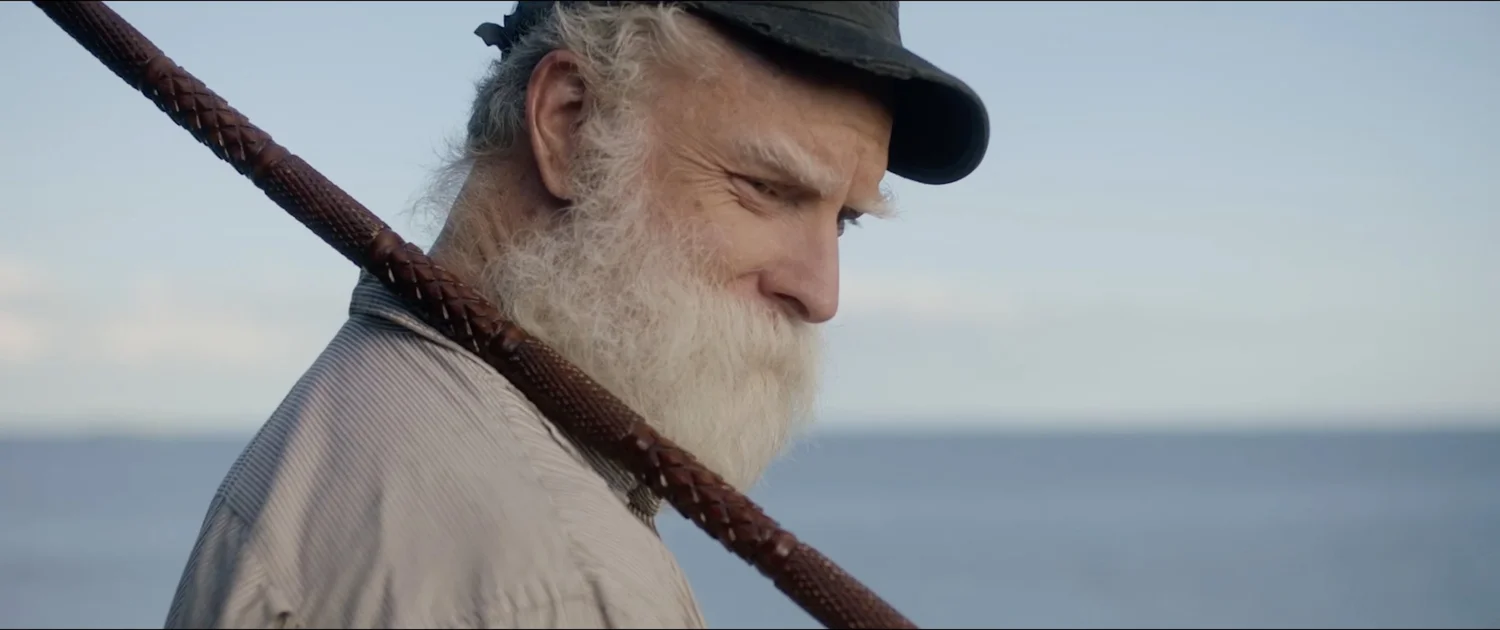
The titular main character of Watching Mr. Pearson is an old matinee idol actor who has come to rely on in-home healthcare at his seaside Connecticut estate. Played by veteran TV and film character actor Hugo Armstrong, Robert Pearson has surpassed the active zeal stage of retirement, where the vintage Porsche 356 Speedster (coincidentally, the same 1956 car driven by Paul Newman in Harper—great energy to borrow from if you ask me) he loves sits under a tarp cover in the garage. Beset with the fog of dementia, Robert is confined to his house and, essentially, is his own ghost.
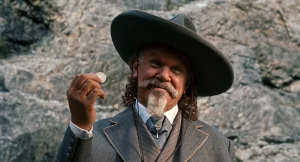
Watching Mr. Pearson, the directorial debut of Dillon Bentlage, coming over from working in the editing bay, dabbles with that latter notion by casting a young Robert Pearson. All around Pearson’s well-appointed home are framed lobby posters (shout out to designer Gabriel Fernandez for the excellent creations) of his past cinematic ventures. Through them and old movies played from time to time in the house, we get glimpses of the fiery redhead star Robert—portrayed by Sam Bullington of The War Between—once was.
LESSON #1: TO STILL SEE THE FIRE IN THE EYES– As Bullington appears in those movies-within-a-movie in Watching Mr. Pearson, we find ourselves comparing that screen persona to the slight and thickly bearded man treading these halls and rooms. Is that brooding-and-wooing heartthrob type, sauntering to the jazzy underscore from the Play It By Ear team of Jasper van Dijk and Kyle Franklin still in Robert Pearson? Thanks to Armstrong and his steely blue irises, we see the piercing spark. The body may not move with striding ease, and previously memorized lines of dialogue return with slowed delivery and a husky gravel in their voice, but the fire is still in there.
There’s a dynamite central scene in Bentlage’s film where Sam Bullington and Hugo Armstrong get to share the same space, bringing this notion of being one’s own spectre to a head. When one of Robert’s nurses racks a round of 8-ball on the pool table, the older Robert turns to see his younger self with a stick in hand across the slate. Bullington’s smirking youth carries that glint in his eye we’ve been teased with in small archival doses throughout the movie up to this point. He’s itching for not only a game, but a hard talk with the shell of a man with a cane and a cough he thinks is before him.
LESSON #2: WHAT WOULD YOU SAY TO YOUR YOUNGER OR OLDER SELF— As each Robert calls their pockets before the slick editing of Jurriaan van Nimwegen frames the crackling thrusts of their cues, Watching Mr. Pearson soaks up every bit of this crossover moment, playing on the wishful dynamic of what anyone would say to their younger or older self if given the chance. There’s never a shout or a bodily threat in this billiards game, but turns taken of tough talk in between shots punch with their own power. Cocksure flair meets weathered iron, where the mutual admonishment between these two personalities of the same man rattles with fascination.
It is, hands down, the best scene in the movie, and the two actors—separated by decades of experience on and off the screen—nail the tension of this stellar encounter without it ever feeling remotely cartoonish. You wish Watching Mr. Pearson could stay right here in this tabletop battle of posturing and reflection. Alas, like many other visions Robert experiences, this one was not meant to last, which connects back to the central challenge of senility. With those glowing cinders manifesting drama that comes and goes, Watching Mr. Pearson stirs a conflict as to what course of action is best for this aging fellow.
Robert has two regular caretakers working 12-hour shifts to accommodate his needs, and they witness very different sides of the man. During the day, the curious and spirited Caroline (newcomer Dominika Zawada) leans into the smolder by playing those old movies and doing script reads with Robert. Consequently, Robert lights up with reminiscence and zest, a great change from his sluggish norm. By contrast, Miguel (Luis Rizo of Dilettantes), working nights, sees the inevitable period of crash and the shrouding confinement of night after the day’s excitement stirred up by Caroline’s time.
LESSON #3: COMPETING ATTITUDES OF CARE—Much of the rising action and falling action in Watching Mr. Pearson rides on Caroline and Miguel’s opposite experiences with Robert and his temperament. When they intersect each day to pass the baton, Caroline shared her excited high hopes for Robert’s overall well-being after observing what she thinks are little breakthroughs. Miguel sees a man getting worse, not better, as he chides Caroline’s encouragement of the actor’s strong, reality-skewing power of pretend.
Their competing attitudes of care are warranted, but take away from the cinematic possibilities of the surreal and existential, like that aforementioned billiards scene. Through all the external squabbling around him, the impressive lead performance of Hugo Armstrong (Lucky, Roman J. Israel, Esq.) shines. Sam Bullington rightfully steals his share of the spotlight, but the gravitational weight of Watching Mr. Pearson always moves through Armstrong. Playing above his age, he masterfully uses strain—not weakness— to deliver a different candor in his dialogue of monologue moments and assertive statements that uphold that this man’s life is not over, and that vim and vigor boldly remain.
LOGO DESIGNED BY MEENTS ILLUSTRATED (#1384)