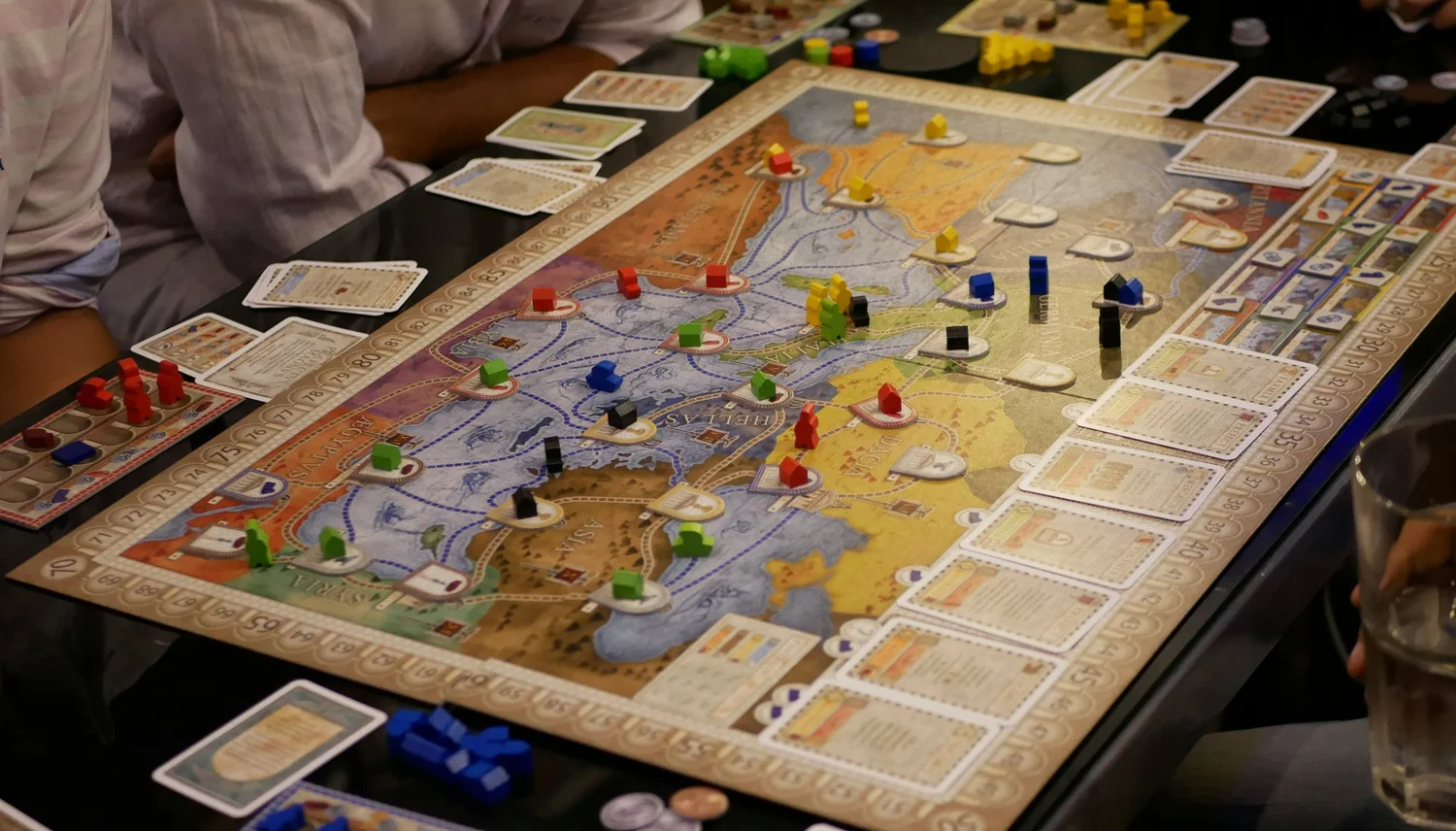

Image: Person in white shirt sitting beside table with puzzle game photo – Free Brown Image on Unsplash
This is turning the boundaries between the various forms of media into a blur. This is a similar transformation that has been experienced in the contemporary board game design, where video games used to seek the services of cinema in terms of providing cutscenes and storytelling indicators. We are well out of the abstract roll and move mechanics. The contemporary tabletop experiences are dense, cinematic experiences that take a lot of inspiration of the narrative patterns of film. It’s described as a big shift in the way video games are designed, played, and experienced, rather than a mere nip and tuck.
1. The Adoption of the Three-Act Structure
The three-act narrative: Setup, Confrontation, and Resolution is one of the greatest borrowings of film. In board games, it was common to have the loop of gameplay be circular and repetitive. Conversely, contemporary narrative games are structured to have a beginning, a middle, and an end.
Act One (The Setup): The actors are acquainted with the theme, their characters, and the inciting incident. This establishes the stakes.
Act Two (The Confrontation): The larger part of the play is made of the rising action. Players deal with difficulty, intensifying challenges, lack of resources, and the twists of the plot that challenge their skills.
Act Three (The Resolution): The game leads to an epic climax, commonly a final or terminal boss fight or a decision that has high stakes, which determines the ending.
This structure ensures that players remain involved as they get the sense that they are involved in a story with a fulfilling narrative as opposed to a turn-taking game.
2. Mechanics as Storytelling Devices
The editing, lighting, and camera in the film serve the narrative. The mechanics involved in the games on the board should aid the story. Designers are abandoning the “mechanics-first” design method, in which the theme is defined by the rules, in favor of the “theme-first” design method, in which the rules impose the story.
Such development can be observed even in those genres that were traditionally ruled by fortuitousness. One of the simplest terningspill was to just depend on chance to produce a thrill, but nowadays, designers employ such random factors in the creation of a certain narrative tension, by faking the random turns of a thriller script. The roll of a dice is no longer a number generator, but it is the deus ex machina or the dramatic reversal of fortune that requires the dramatic storytelling.
3. Character Arcs and Immersion
Movies survive or die by the characters and the board games are following suit. The contemporary games usually have special characters, with their own abilities, back stories, and objectives.
Development: As a character increases in power during a film, so do player characters by increasing in level or other equipment and abilities.
Agency: The players are provided with significant decisions, which impact the result. This is a reflection of the dramatic decisions that a hero has to make, which builds an ownership of the story.
Empathy: Games can provide emotional commitment by offering players elaborate roles and secrets. You are not merely opening a chess piece, but saving a life or that you are unraveling a mystery.
4. Pacing and Tension
Cinema is an art of timing, the art of working with time and tension to arouse feeling. Designers of board games are now using the principles to apply to the gameplay flow.
Narrative games do not rely on the flat tempo, the turn being the same every time; instead, they rely on their mechanics to regulate the rhythm of the game.
Ticking Clocks: Timers and restricted rounds present the suspense of the countdown of a thriller.
Accumulated Threats: Dooms and event decks that get increasingly intense as the game progresses are used to model the escalating tension of a horror game.
The Climax: The rules may vary at the last levels to accelerate the game, or to make it more challenging, to provide a film-like climax.
Board game design has been taken to the next level by the effect of cinematic narrative structures on the process of its design, causing the tabletop medium to cease being merely a form of leisure and become a medium of deep storytelling. Designers are developing experiences that touch more profoundly with the incorporation of the three-act structure, the development of the characters, and the editing rhythm. With the industry being innovative, there will be a continued blurring of the line between movie viewing and gaming. Playing a detailed strategy campaign or a terningspill, the contemporary player is not a participant in a game anymore, he is a co-author of a drama that unfolds.