

Images courtesy of Oscilloscope Laboratories
OBEX— 2 STARS
The intentionally low-frills science fiction fantasy film and 2025 Sundance Film Festival entry, OBEX, from obscure cinema extraordinnaire Albert Birney, is set during the specific year of 1987 and presents a very particular main character from Baltimore. Played by the director calling his own number, Conor Marsh lives alone with his dog, Sandy. We see him enjoying two primary sources of media entertainment: the triple set of televisions divided into each room of his small apartment and his Apple Macintosh SE personal computer—a cutting-edge piece of hardware for 1987.
What we don’t see Conor Marsh do much of is leave. A trusted neighbor named Mary (Callie Hernandez of Alien Covenant and La La Land, a nice get for Birney) delivers the groceries to payments left outside a closed door. Conor runs a mail-order business out of his home as “Computer Conor,” specializing in creating personalized dot-matrix-printed digital art recreating photographs sent to him by customers. The one thing that tugs him out of the door is Sandy, where the environmentally touchy Conor regards (while Sandy occasionally munches) the noisy presence of cicadas hatched from their 17-year cycle.
LESSON #1: THE DESCRIPTION OF AN ISOLATIONIST— For better or worse, OBEX makes me wonder what an incel is without the sexual frustration, misogynistic hangups, and pungent male entitlement. It would be this lanky and generally calm hermit. The 36-year-old Conor Marsh is a social isolationist who has his niches, creature comforts, animal companion, steady sources of means, and no more OCD tendencies than the next person. If depression and anxiety are present, they are, thankfully, on the low end. Nevertheless, with a hint of creepy Norman Bates-esque dreams, Conor is an odd bird, to say the least, even by 1987 standards.
One day, Conor sees an advertisement in a computer magazine for an intriguing new game from Contatix Software, matching the ominous title of the film. OBEX bills the notion that they will take your likeness and insert you into the game. Excited and inspired, Conor sends in a submission videotape describing himself. When the special order arrives, the man inserts the 3.5” diskette into his Macintosh and is quickly disappointed by the cheapness and short game length of OBEX.
He doesn’t give it another play, but that doesn’t mean OBEX is going away. Conor receives an eerie message coming out of his printer, and Sandy turns up lost. Determined to get his furry bestie back, Conor leaves his apartment and seemingly steps into OBEX. What began as a dud of a game escalates into an unconventional adventure for our achorite forced to go outside and touch grass.
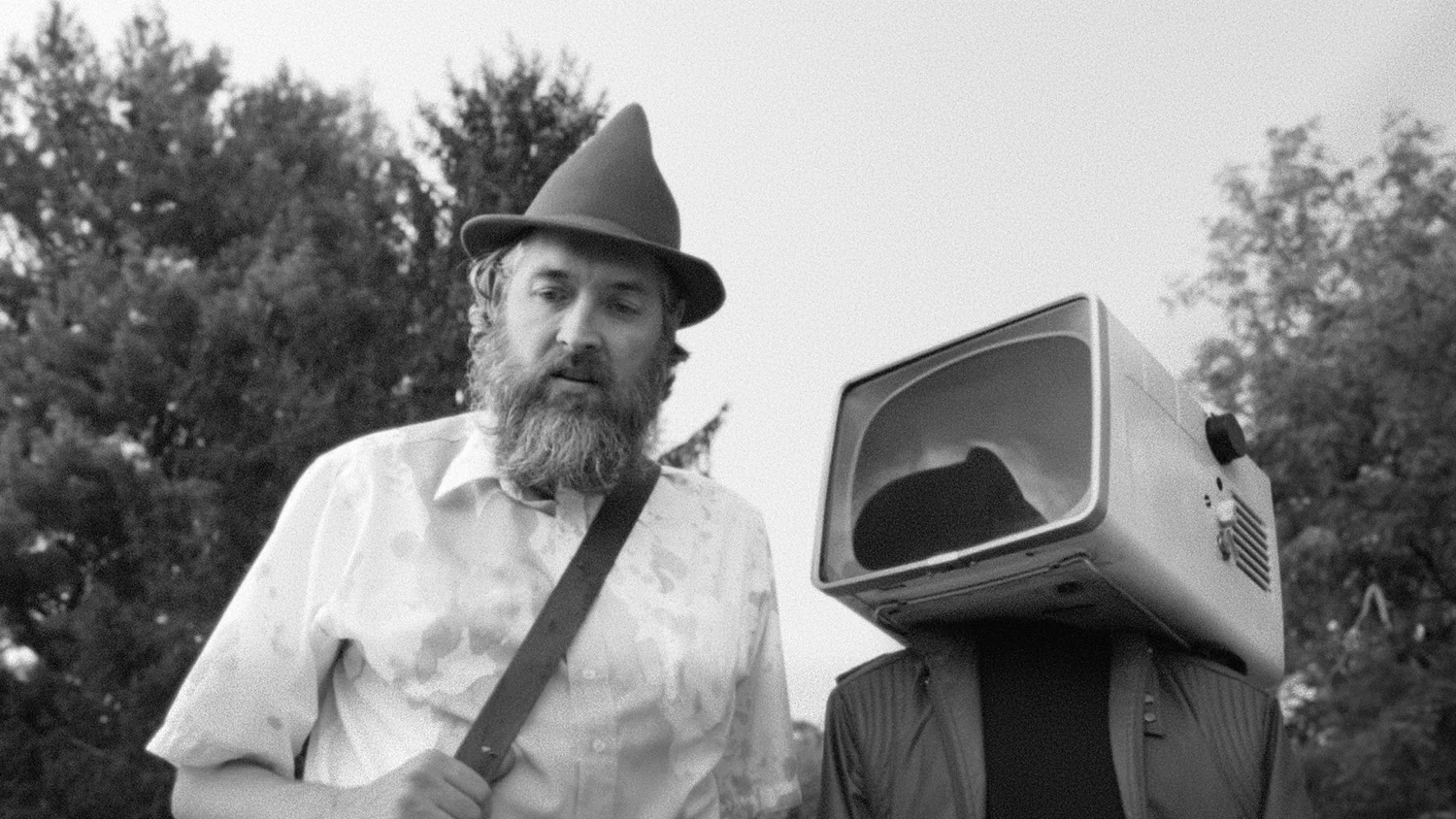
LESSON #2: IS IT REAL OR IS IT A GAME?— Conor encounters the familiar face of Mary, playing the guise of a shop owner, who gifts him a map to this wooded realm, which peels its own curtain back on suburban aesthetics. She guides him through the start of his journey to rescue Sandy and defeat the demon Ixaroth, matching the true plot of the video game. On his travels, he picks up a road buddy named Victor (Freeland’s Frank Mosley), a chatty man with a TV for a head who provides good company for our uncertain new hero. The kitschy rub of OBEX is whether or not this is all a dream for Conor or an actual, lived-out ordeal.
From the lens of cinematographer Pete Ohs, OBEX is shot in stark black-and-white. This palette choice hides the low-budget details and softens the pretend gore that bleeds from the increasing violence our man encounters. While we’ve seen black-and-white be a stylish vintage choice for independent filmmakers taking on period films (look no further than Ryland Tews’ pair of Lake Michigan Monster and Hundreds of Beavers), it feels like the wrong fit for the neons and excess we cite and remember from 1987. Had this been set a quarter-century earlier (you’d have to take out the computer-centered trappings, of course), then The Twilight Zone vibe would be an engrossing effect rather than a diluting factor.
Like the initiative of the protagonist, OBEX requires a shove to get going, but a proper quest emerges from the offbeat imagination of Albert Birney. The Strawberry Mansion filmmaker is out to tell his own story and fly his own flag. He had a choice between a nostalgic swashbuckler or a descent into a borderline incel’s internal nightmare. Birney chose the latter as OBEX gets more R-rated than it probably needs to. Asking Albert Birney to paint with a little more zip than dread would take away from his distinctiveness. This route will have its cult fans who stoke the fires of commentary comparing today’s anti-social generation with the past one. However, it’s still a course that regrettably shrinks the contagious wonder the premise of this daring jaunt could have generated.