

How Vegazone Casino’s Visual Style Echoes Mars et Avril
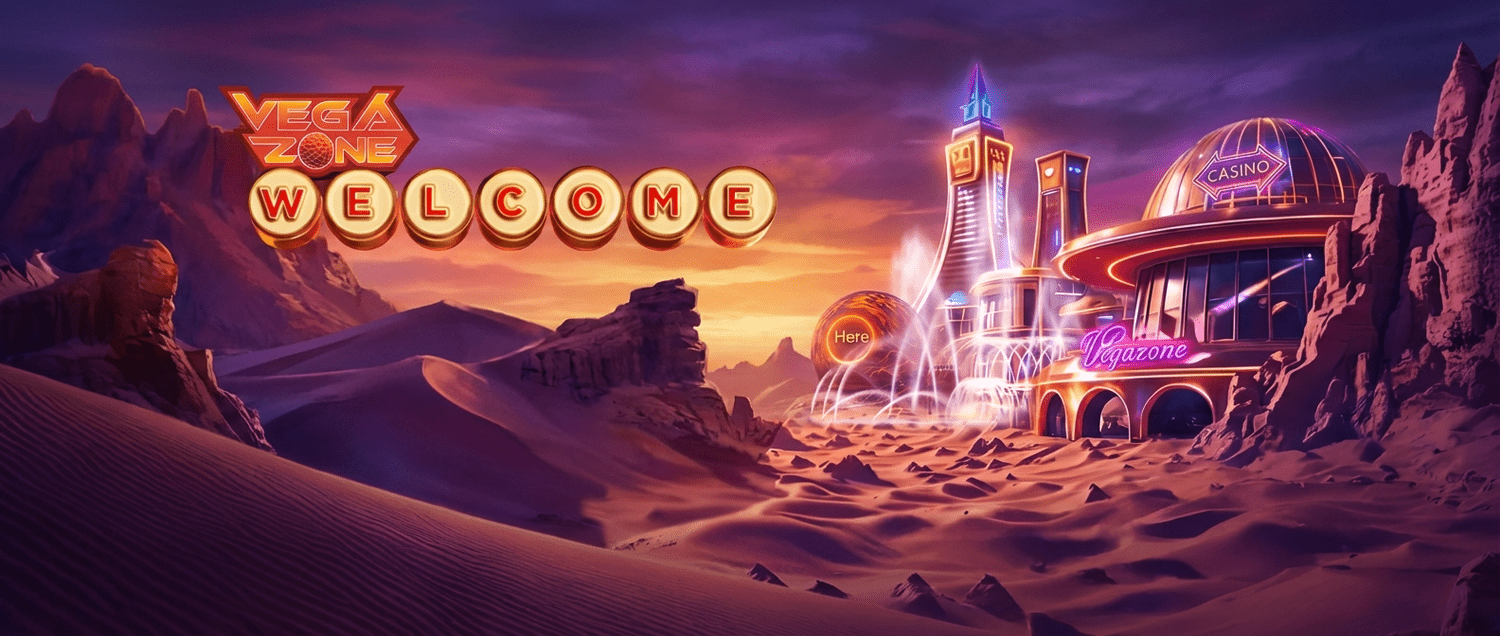
On Vegazone Casino’s homepage, an image immediately comes through that is easy to associate with Mars et Avril: a Martian landscape, futuristic architecture, soft neon light, and a sense of space outside the ordinary environment. The owner of Vegazone casino clearly drew on the same system of imagery that Mars et Avril made central to its world. This is not about literally repeating scenes from the film, but about borrowing its mood. Mars here appears not as a place of danger, but as a territory for unusual experience, visual comfort, and distance from everyday surroundings. In the film, Mars is presented in a similar way. It is not a harsh technical zone and not a territory of conflict. It is a place with its own atmosphere, where not only technology matters, but also the impression created by the space itself.
A similar visual move can also be seen in the bonuses section. There, the resemblance is no longer read through the general background, but through color, composition, and the overall mood of the design. If the reader has seen Mars et Avril, this comparison emerges quite quickly.
General motif
In the film
In Vegazone Casino’s design
Cosmic backdrop
Mars serves as the central image
The Martian theme is visible from the very first screen
Atmosphere of the future
Futurism is conveyed through form and mood
The same effect is created through architecture and lighting
Visual distance
The world is separated from ordinary reality
The interface also creates the feeling of a different environment
Soft sci-fi
The emphasis is on aesthetics rather than hard technology
The visual design follows a similar principle
Unified style
The film is built on a cohesive artistic language
The website is designed according to the same logic of a unified image
From here, it is natural to move on to the film itself: in Mars et Avril, not only the external image of Mars matters, but also its role within the story. The planet is not there simply as a beautiful backdrop. Through it, the film explores emotion, distance, personal choice, and a uniquely human experience.
Mars as a Cultural Space, Not a Mission Objective
In Mars et Avril, the Martian theme is brought to the forefront already at the level of the world itself: the story takes place in a futuristic Montreal at a time when humanity is preparing for its first landing on Mars. But the film is not structured as a chronicle of an expedition. According to available synopses and reviews, the plot centers on Jacob Obus, an elderly musician, his friend Arthur, and the photographer Avril. On the surface, this is a sci-fi setting. In essence, it is a story about people of art living against the backdrop of a major cosmic event, yet occupied not with conquering a planet, but with their own emotions and relationships.
This is where the film’s main difference from standard science fiction lies. Mars is not needed here as an object of conquest. It functions as a symbol of cultural transition. While 3D news bulletins discuss the future mission, within the story itself, what matters more are music, photography, form, and personal attraction. Because of this, the planet is perceived not as a military or technical target, but as part of a broader image of the future in which space has already become part of humanity’s cultural imagination.
This is clearly visible in the structure of the plot:
the background of the film is the preparation for the first crewed mission to Mars;
the center of the action is the love triangle between Jacob, Arthur, and Avril;
the characters’ professions are connected with art: music, design, photography;
Mars is present as an idea, an image, and a direction of attraction rather than as the main field of action.
Why Emotions Remain at the Center of the Film
If Mars et Avril is described briefly, it is a story of obsession, desire, and emotional rivalry. Jacob is a famous elderly musician. Arthur is his friend and the creator of unusual musical instruments. Avril is a young photographer who enters their world and changes the dynamic between the two men. The film should be understood primarily as a love triangle, not as techno-fantasy about a mission to Mars. This is an important point of reference.
Because of this, the futuristic environment works as an amplifier of emotion: the underwater club where Jacob performs, the unusual instruments that Arthur creates inspired by the female body, and Avril herself as both muse and object of desire all make the film feel intimate. Even when a historic Martian mission is being discussed in the background, what is resolved within the frame are deeply personal questions: whom one chooses, whom one admires, whom one idealizes, and why closeness turns out to be more complicated than technological progress.
What matters here for the reader:
the film speaks not about conquering space, but about human vulnerability;
the Martian theme intensifies the distance between the characters;
the future is shown through emotional conflict rather than through the mechanics of technology.
How the Film Connects Art, the Body, and Futurism
One of the most concrete and unusual details in Mars et Avril is Arthur’s musical instruments. Sources about the film explicitly state that he creates them inspired by the forms of the female body. This is not a minor detail, but an important narrative and visual layer. When Avril enters the story, she becomes not merely an object of love, but part of the artistic impulse itself. It is worth mentioning separately that Arthur creates an instrument based on her body, and that this design turns out to be connected to a form discovered on Mars. However, this also carries a tragic undertone: Jacques’s attempt to preserve love through form proves illusory, because that form already exists outside him and does not belong to him. In this way, the film leads to the idea that beauty, desire, and harmony are not created by human beings, but merely discovered by them in the surrounding world — from the human body to distant Mars. This is exactly where the film most clearly unites art, desire, and space.
Because of this, Mars et Avril differs from an ordinary aesthetic sci-fi drama. It does not simply place its characters in a beautiful future, but shows how a fantastic environment is filtered through music, photography, and bodily imagery. Futurism here is not cold. It is fluid, almost intimate. This is useful for the article because such specificity explains why the visual parallels with Vegazone casino are built not only on the backdrop of Mars, but also on a shared principle: the image of the future is assembled through style, form, and mood.
Key elements of this layer:
Arthur creates musical instruments as artistic objects;
Avril becomes the muse and visual center of the story;
the form of the body is translated into design;
Mars is connected not with technology, but with artistic association.
How the Film Portrays Attraction to the Unattainable
One of the most precise themes of Mars et Avril is the pull toward what cannot be fully held onto. This is visible on two levels at once. The first is personal: Jacob and Arthur are drawn to Avril in different ways, but neither of them receives a simple, lasting answer. The second is symbolic: throughout this story, Mars is always present in the background as a distant destination that humanity is only preparing to approach. As a result, the personal and the cosmic begin to rhyme with one another within the film.
Because of this, Mars in the story stops being just a beautiful planet in the scenery. It becomes an image of unattainability, a projection of desire, and a sign of inner distance. Avril functions in a similar way within this structure: she is not simply a participant in the plot, but a figure around whom longing, inspiration, and uncertainty are concentrated. That is why the film feels deeper than an ordinary science-fiction melodrama. It shows that a person is drawn both to another human being and to a distant horizon that promises new meaning, yet offers no guarantee of closeness.
What makes this theme especially noticeable:
the love triangle is built not on action, but on inner tension;
Mars always remains close by as a great but distant goal;
Avril is linked to the image of attraction and inaccessibility;
the future in the film intensifies the sense of distance rather than removing it.
What the Film Ultimately Means and the Lesson It Carries
If the content of Mars et Avril is summarized briefly, it is the story of the musician Jacob Obus and his friend Arthur, who both become emotionally involved with Avril, a young photographer, in a futuristic Montreal against the background of preparations for the first landing on Mars. In form, this is science fiction. In essence, it is a melancholic story about age, desire, inspiration, and the impossibility of fully keeping another person close. The Martian mission unfolds in the background, but it does not displace what matters most: even in the world of the future, a human being remains dependent on feeling, memory, and inner choice.
The lesson of the film is that a technological leap does not erase human emotional nature. One may live in a city of the future, listen to music played on strangely shaped instruments, watch news about Mars, and still experience the same questions as before: love, rivalry, loss, loneliness, and attraction to the unattainable. The digital design of the online casino picks up a similar aesthetic language to that of the film, so admirers of this cinematic masterpiece are invited to appreciate our special project — https://vegazonespel.com/ , in which our team reflected a “continuation” of the visual world of Mars et Avril.