
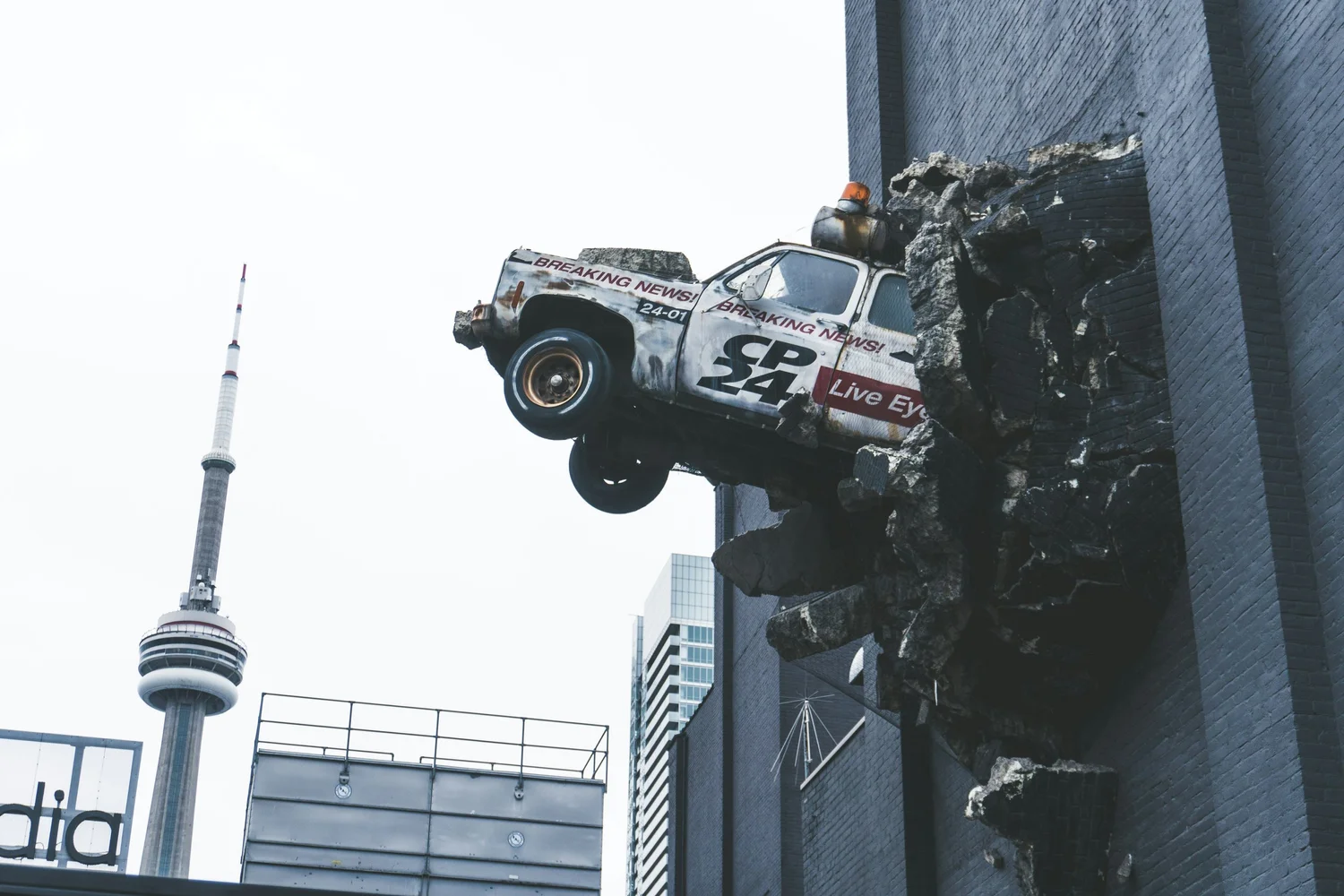

Image: White police car in wall photo – Free Car Image on Unsplash
Car chases sell tickets. Audiences have known it since Bullitt sent a Ford Mustang screaming through the hills of San Francisco, and filmmakers have been raising the stakes ever since. But behind every squealing tire and spectacular crash is a logistics operation most moviegoers never think about, one that involves sourcing, rebuilding, and ultimately destroying hundreds of vehicles in the name of cinema.
Some productions became notorious for the sheer scale of the automotive carnage involved. From cult-favorite road movies to billion-dollar franchise juggernauts, the car counts on certain films read like an insurance nightmare.
Joe Webster, Marketing Director at A1 Auto Transport and a vehicle shipping and logistics expert, knows better than most what it takes to move, source, and manage vehicles at scale.
The Top 10 Movies That Destroyed the Most Cars
Webster spotlights the films most infamous for mass on-set destruction.
1. Transformers: Dark of the Moon – 532 Cars
No film in Hollywood history has chewed through more cars than Michael Bay’s third Transformers installment. To stage the film’s centerpiece battle through the streets of Chicago, the production sourced hundreds of vehicles and coordinated one of the most ambitious automotive destruction set pieces ever put on screen.
“When you’re staging a battle across several city blocks, you need vehicles that look real but are built to be wrecked,” says Webster. “That means working with salvage suppliers to source cars in bulk, then modifying them so they can be safely crashed, flipped, or crushed on camera.”
2. Fast & Furious 6 – 350 Cars
The sixth Fast & Furious chapter featured a climactic runway chase involving tanks, supercars, and a cargo plane, and the production didn’t hold back on the vehicle count.
“The Fast franchise built its entire identity around cars,” Webster notes. “By the sixth film, stunt coordination had become a production unto itself. Sourcing that many vehicles, transporting them to the location, and prepping them for the camera takes serious logistical planning.”
3. The Matrix Reloaded – 300 Cars
The Wachowskis built a dedicated 1.4-mile freeway stretch specifically for the film’s legendary highway chase, then wrecked 300 cars on it. The sequence took months to film and remains one of the most technically ambitious action set pieces of its era.
“Those 300 cars weren’t just crashed; it was choreography at its finest,” says Webster. “Every impact was planned, and every vehicle was prepped well in advance.”
4. Fast Five – 260 Cars
Fast Five‘s vault-dragging sequence, in which a 10-ton bank vault is hauled through the streets of Rio de Janeiro, became one of the franchise’s most iconic moments, and one of its most vehicle-intensive.
“The production had to account for the vehicles directly involved in the stunt as well as all the background cars being clipped, spun, and totaled during filming,” Webster explains.
5. The Fast & the Furious: Tokyo Drift – 249 Cars
Tokyo Drift built its car count through sheer volume of drift sequences filmed across the city. Many of the 249 vehicles didn’t meet a dramatic end, but rather they were simply worn out across dozens of takes.
“Drifting is hard on cars at the best of times,” Webster says. “When you’re filming it repeatedly, attrition is inevitable.”
6. Furious 7 – 230 Cars
From the Abu Dhabi skyscraper sequence to its emotional finale, Furious 7 was one of the most vehicle-intensive entries in the franchise.
“For every supercar on screen, there are dozens of stunt vehicles working around it,” Webster notes. “It’s the supporting fleet that drives the numbers up.”
7. Fast & Furious – 190 Cars
The fourth mainline entry brought the original cast back together and upped the production scale to match. A fuel truck pursuit through a cross-border tunnel accounted for much of the film’s vehicle toll.
“A cross-border tunnel pursuit demands enormous vehicle preparation,” says Webster. “The confined space makes every stunt far more technically demanding to pull off safely.”
8. The Junkman – 150 Cars
Made in 1982, long before CGI offered any shortcuts, The Junkman was built almost entirely around destroying as many vehicles as possible, all 150 of them, for real.
“Sourcing 150 wreckable vehicles in the early ’80s meant working the salvage circuit hard,” says Webster. “If it was in the shot, it was getting destroyed.”
9. A Good Day to Die Hard – 132 Cars
The fifth Die Hard film staged a sprawling chase through Budapest, doubling for Moscow, tearing through 132 vehicles in the process.
“Filming a city chase on that scale means coordinating with local authorities, managing road closures, and shipping vehicles across borders,” Webster explains. “The logistics behind a sequence like that are almost as complex as the stunt itself.”
10. 2 Fast 2 Furious – 130 Cars
The Miami-set sequel staged a multi-car chase across the city’s causeways that accounted for 130 vehicles, modest by later franchise standards, but still an impressive tally for an early-2000s production.
“This movie set a template for what the franchise would eventually become,” notes Webster, “and the groundwork laid here in terms of stunt coordination paid dividends in every sequel that followed.”
Joe Webster, Marketing Director at A1 Auto Transport and vehicle shipping and logistics expert, commented:
“People assume the cars you see destroyed in movies are random vehicles pulled off the street, but the reality is far more considered. The majority are sourced through salvage auctions, cars that have already been written off by insurers and are at the end of their road life.
“Before they ever appear on camera, they’re stripped down and rebuilt with roll cages, fire suppression systems, and other safety modifications to protect the stunt drivers inside.
“CGI has changed the numbers. Productions from the ’80s and ’90s had no choice but to wreck the real thing. Today, a director can destroy a hundred cars on screen with a fraction of the physical count. The films on this list that predate modern visual effects deserve particular credit; what you see is what actually happened.”
ENDS
Credit
If you want to use this release, please add credit with a link to the A1 Auto Transport website (https://www.a1autotransport.com/). Doing so will help us offer more stories and studies in the future.
About A1 Auto Transport
A1 Auto Transport is a U.S.-based vehicle shipping and logistics provider with more than three decades of experience moving cars, motorcycles, RVs, boats, heavy equipment, and specialty vehicles across the United States and around the world. They offer a full suite of transport services, including door-to-door delivery, terminal-to-terminal options, enclosed and open-carrier shipping, and tailored solutions for exotic, classic, and high-value vehicles.
With operations spanning all 50 states and service to over 190 countries, A1 Auto Transport combines a vetted network of licensed carriers with comprehensive cargo insurance and real-time tracking to ensure safe, efficient delivery for every shipment. Built on decades of industry expertise and a commitment to transparency and customer care, the company prioritises clear pricing, straightforward communication, and customised logistics planning to simplify the often complex process of vehicle transport. Whether relocating a personal car, coordinating corporate fleet moves, or arranging international delivery, A1 Auto Transport aims to deliver dependable, cost-effective service and peace of mind from pickup to final destination.
Joe Webster is the Marketing Director at A1 Auto Transport.
Sources
10 movies that destroyed the most cars – Top Gear